Finding termite mud tubes on your property is one of those moments that really stops you in your tracks – and for good reason. These narrow trails of packed soil are one of the clearest signs there are of active subterranean termite activity – and what you do in the next few minutes really can affect how well a treatment works down the track.
Termites are a big, big deal – so we’ve put together absolutely everything worth knowing about termite mud tubes the second you spot one.
What do termite mud tubes look like?
Before getting into what to do, it helps to know what you’re actually looking at.
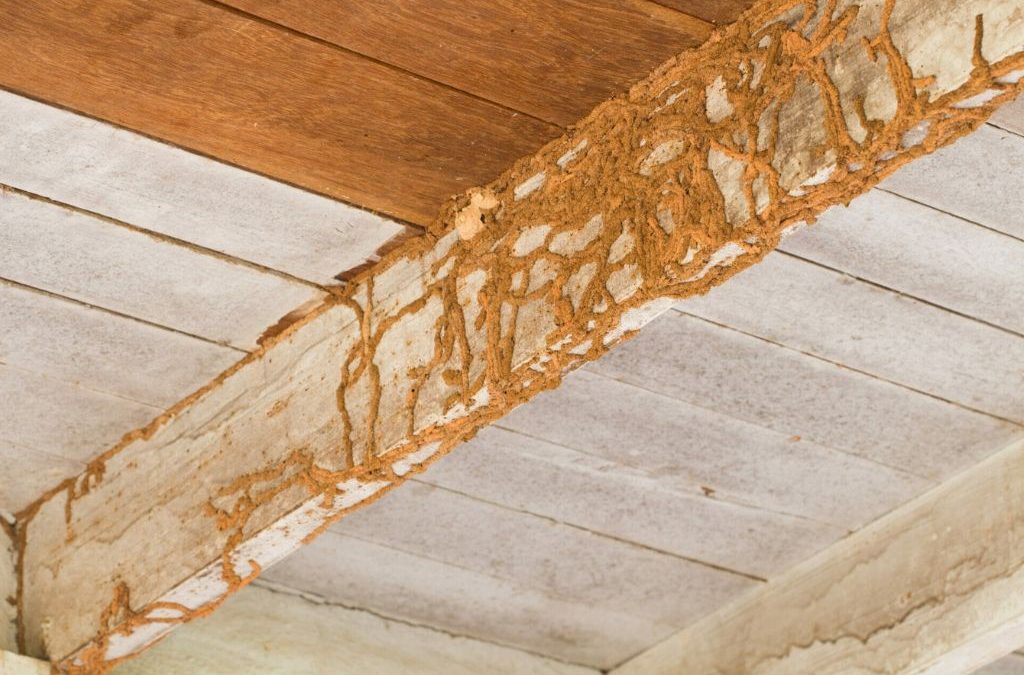
A termite mud tube is:
- About the width of your finger, or a pencil
- Made of soil, chewed wood and termite saliva
- A dull brown or grey colour that blends in against timber, brick or concrete.
You’ll find them running in roughly straight lines, often vertically up a foundation wall or support post, connecting the termite colony underground to a food source above it.
Termites build these tubes because they’re soft-bodied and vulnerable to drying out, so the tube shields them from open air, light, and predators as they travel back and forth during the destruction of your property.
What to do if you find one
Spotted a termite mud tube? Don’t just jump straight for the spray can! Instead, work through these in order – because the first few steps you take protect whatever treatment comes after them.
1. Don’t disturb the tube
The instinct to knock it down or spray it immediately is understandable, but resist that urge.
Disturbing an active tube can cause the colony to retreat and relocate somewhere else on the property, which makes a full treatment much harder to achieve later. Leaving it intact for now gives a professional pest control expert something real to assess.
2. Do the break test
If you’re going to do something to the tube, just snap off a small section of it – no more than a few centimetres. Then leave the area alone for a day or two.
- If it’s been patched back up with fresh mud, the colony is active and still using it.
- If it stays broken and empty, it may be an old, abandoned tube – although that still doesn’t rule out activity elsewhere on the property.
3. Check exactly where you found it
Location tells a pest controller a lot about what’s actually going on, so take note of where the tube is before calling anyone.
The yard?
Termite mud tubes in the yard often run along:
- Fence posts
- Tree stumps
- Retaining walls
- Garden beds.
They usually mark a path from an underground nest toward a nearby structure. These are often the first visible sign before termites ever reach the house itself.
A wall?
Termite mud tubes on a wall, particularly an external foundation wall, usually mean termites are actively bridging the gap between the soil and the timber framing above the slab, which is one of the most common entry points into a home.
The house?
Termite mud tubes inside the house are the most serious of the three, since they mean termites have already made it past the foundation and are operating somewhere within the building itself:
- Inside wall cavities
- Under your flooring
- Around plumbing penetrations.
Termite mud tubes in the house found behind furniture, in roof voids or inside cupboards can be easy to miss for months, which is exactly why regular inspections matter even when nothing looks obviously wrong on the surface.
4. Look for other warning signs nearby
Mud tubes are usually not the whole story.
Here’s what to do next:
- Check nearby timber for a hollow sound when tapped
- Look for discarded termite wings near windowsills or light fittings
- Watch for small holes or blistered-looking paint on skirting boards and architraves.
Any one of these on its own isn’t necessarily conclusive, but a few of them together paint a much clearer picture of what’s happening.
5. Take photos before you do anything else
A few clear photos of the tube, its location and any surrounding damage give a pest controller useful context before they even arrive, and they’re worth having on hand regardless of what happens next.
6. Avoid DIY chemical sprays
Off-the-shelf sprays might kill the termites you can see, but they do nothing for the colony underground. And in some cases, all you’re doing is scattering the termites into new, harder-to-treat areas of the property.
7. Book a licensed inspection
A mud tube confirms activity, but it doesn’t tell you how far that activity has spread.
A proper termite inspection checks the full property, not just the spot where you happened to notice a tube, including areas that are much harder to check yourself, like subfloor spaces or roof voids.
8. Get a tailored treatment plan
Depending on what the inspection finds, treatment might involve:
- A chemical soil barrier
- A baiting system
- A combination of both.
The right approach depends on the extent of the infestation and the construction of the property – it’s never a one-size-fits-all solution.
Why this matters more than it might seem
Termite damage often goes unnoticed for a long time, since most of it happens behind walls and under floors rather than somewhere obvious. A single mud tube might represent a colony that’s been active for months or even years before you ever spotted the evidence.
Treating the visible tube without addressing the colony itself is a bit like mowing over a weed without pulling the root – satisfying for a moment, but almost certainly not the end of the problem. Regular professional inspections catch this kind of activity long before a visible tube ever appears.
If you’ve found termite mud tubes anywhere on your property, get in touch with Cannon Pest Management. We’ll inspect your property properly, confirm exactly what’s going on, and put together a termite treatment plan that actually deals with the colony behind it. Reach out today!