(And what do mice have to do with it?)
You walk into the kitchen, glance across the benchtop and spot something that definitely was not there yesterday. A few small, dark droppings. But what are you actually looking at here … mouse droppings? Or could they in fact be cockroach droppings.
Either way, we know what you’re actually thinking:
“Great.”
But once the initial disgust wears off, the next question is usually: What exactly has been in here?
Believe it or not, cockroach droppings and mouse droppings can look surprisingly similar – particularly when some of Melbourne’s larger cockroach species are involved (and we have plenty of those!)
Getting the identification right really does matter, though – because a cockroach infestation and a rodent problem are very, very different things:
- Different hiding places
- Different behaviours
- Different treatment methods.
Have you found suspicious droppings around your home? We’ve put together a guide so you can work out exactly what you may be dealing with here.
What do cockroach droppings look like?
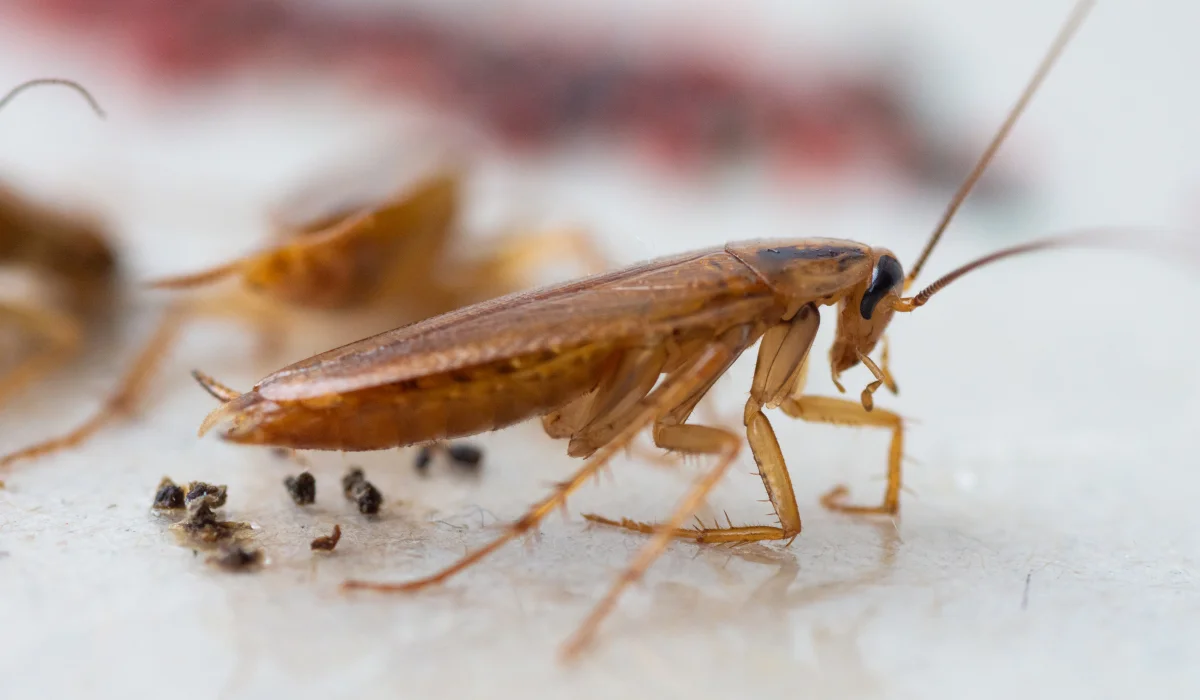
There’s really no single answer here because cockroach droppings vary depending on the size and species of cockroach.
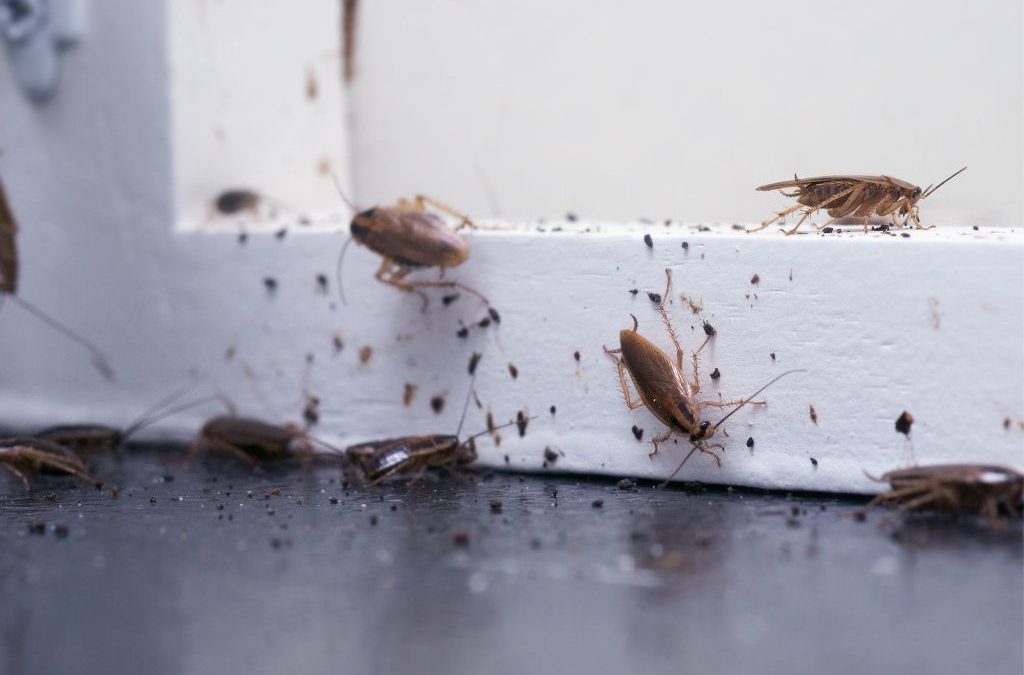
Small cockroaches tend to leave very small dark specks.
These can resemble:
- Ground black pepper
- Coffee grounds
- Tiny black dots or stains.
You’ll very often notice these specks along cupboard edges or around hinges – or beneath your appliances or near cracks where cockroaches are hiding.
Large cockroach droppings look quite different.
They can be:
- Dark brown or black
- Cylindrical
- Pellet-like.
Unfortunately, this is where the confusion often starts, because large cockroach droppings can look somewhat like mouse droppings at first glance.
So how do you tell the difference?
5 Differences Between Mouse and Cockroach Droppings
1. Look at the size
Mouse droppings are generally larger than cockroach poop.
- A typical mouse dropping is several millimetres long and quite easy to see individually.
- Droppings from small cockroach species may be little more than specks.
- Large cockroach droppings can get closer to the size of small rodent droppings, however, so size alone should not be your only clue.
2. Check the shape
Mouse droppings usually have a fairly recognisable pellet shape. They are elongated and often taper towards one or both ends.
Larger cockroach droppings, on the other hand, tend to be shorter and more blunt-ended.
Some cockroach droppings may also have small ridges running along them, although you may need to look more closely than you’d like to for this level of detail.
In simple terms:
Mouse poop = longer, smoother pellets, often with pointed ends.
Cockroach poop = smaller, darker pellets or specks, often with blunter ends.
3. Look at where you found them
Location can tell you almost as much as appearance.
Cockroach droppings are commonly found in warm, dark areas close to food and water, including:
- Kitchen cupboards
- Under sinks
- Behind refrigerators
- Around dishwashers
- Pantry corners
- Cracks and crevices.
Mouse droppings may also appear in kitchens, but they are often found along walls, inside cupboards, around stored food and on established travel routes between nesting and feeding areas.
So: If the droppings are concentrated deep inside tiny cracks or around the workings of an appliance, cockroaches become a stronger possibility.
4. Look for other clues
Still unsure whether you have mouse or cockroach droppings? Look around the area rather than relying on the droppings alone.
Cockroaches may leave behind:
- Shedded skins
- Egg cases
- A noticeable musty smell when numbers become high.
Mice, on the other hand, may leave:
- Gnaw marks
- Shredded nesting material
- Damaged food packaging
- Greasy marks along frequently used routes.
These extra signs can make mouse vs cockroach droppings much easier to distinguish.
5. Consider how much you are finding
One or two droppings do not necessarily tell you how serious your pest problem is.
But repeated cockroach droppings in the same location are a strong sign that cockroaches are regularly feeding, travelling or hiding nearby.
That is particularly important because cockroaches are nocturnal and excellent at staying out of sight. You may find their droppings well before you start seeing large numbers of live cockroaches.
Are cockroach droppings dangerous?
Not really. But they certainly should not be ignored.
Why’s that? Because cockroaches are pretty disgusting as they move through your drains, trawl through your rubbish, feast on decaying material, and generally just hang out in contaminated environments before arriving at your hygienic kitchen surfaces and food-storage areas.
Their droppings can contribute to contamination inside the home, while cockroach debris can also aggravate allergies and asthma in some people.
Have you found cockroach poop around your food preparation areas? Immediately clean the affected surface carefully and avoid sweeping or disturbing dry material unnecessarily.
More importantly, find out why the droppings are there. And be aware: simply cleaning them away does not remove the cockroaches producing them.
Found cockroach droppings? We can help
If suspicious droppings keep appearing around your kitchen, you do not need to spend the next week trying to identify every tiny black speck yourself.
Cannon Pest Management provides professional cockroach control throughout Melbourne’s eastern suburbs and the Yarra Ranges.
Our licensed pest controllers can:
- Identify the likely pest
- Inspect the areas where it is hiding
- Recommend an appropriate treatment rather than simply treating the visible symptoms.
If you’re wondering whether you have cockroach poop vs mouse poop – or you already know cockroaches are the problem – call Cannon Pest Management for a chat and a free quote.